

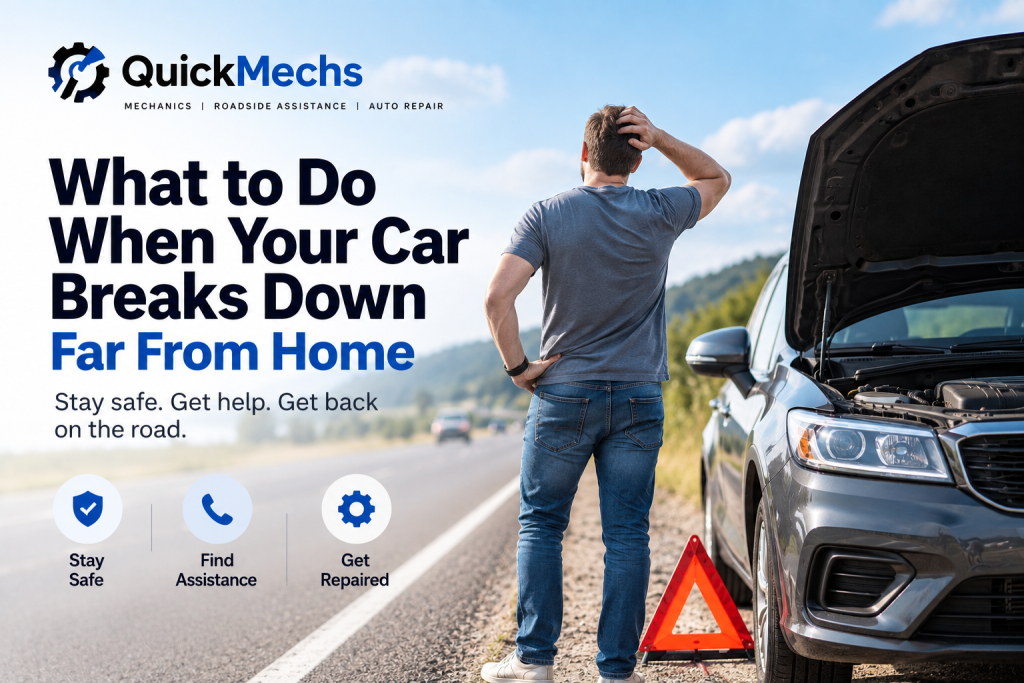
A vehicle breakdown is stressful at any time, but it can be even more frustrating when you’re miles away from home.
Whether you’re traveling for work, taking a road trip, or simply driving through an unfamiliar area, knowing what to do can help you stay safe and get back on the road faster.
Here are the steps to take if your car breaks down far from home.
1. Get Your Vehicle to a Safe Location
Your first priority should be safety.
If your vehicle is still moving, carefully pull over to a safe location away from moving traffic. If possible, move onto the shoulder, a parking lot, or another safe area.
Turn on your hazard lights so other drivers can see you.
If you’re stopped in a dangerous location, avoid standing near traffic or attempting repairs in an unsafe area.
2. Identify What Happened
Once you’re safely stopped, try to determine what caused the problem.
Think about what happened immediately before the vehicle stopped working.
Did you notice:
- A warning light on the dashboard?
- Strange noises?
- Smoke or unusual smells?
- Loss of power?
- Difficulty steering?
- Problems with the brakes?
- Overheating?
- A flat tire?
- Difficulty starting the engine?
If you know what happened, this information can help a mechanic understand the problem more quickly.
However, don’t attempt a repair if you’re not sure what you’re doing or if doing so could put you at risk.
3. Determine Whether You Need a Mechanic or Towing
Not every breakdown requires the same type of assistance.
A vehicle with a dead battery, flat tire, or certain minor mechanical problems may be able to receive assistance where it is parked.
More serious problems may require the vehicle to be towed to a repair facility.
Consider:
Can the vehicle be safely repaired where it is?
If yes, a mobile mechanic may be able to come to your location.
Does the vehicle need to be moved to a shop?
If yes, you may need towing or roadside assistance before the repair can begin.
Getting the right type of help can save time and prevent unnecessary expenses.
4. Don’t Keep Driving if the Vehicle Is Unsafe
Sometimes a vehicle will continue moving even though something is seriously wrong.
That doesn’t necessarily mean you should keep driving.
Problems involving the brakes, steering, overheating, major engine issues, or other critical systems can become more serious if you continue driving.
If you’re unsure whether the vehicle is safe to drive, have it inspected by a qualified automotive professional.
5. Find a Mechanic Near Your Current Location
Being far from home doesn’t mean you have to wait until you return home to get your vehicle repaired.
A local mechanic may be able to diagnose the problem and determine what needs to be done.
Depending on the situation, you may have the option of:
- A mobile mechanic coming to your location
- Taking the vehicle to a local garage
- Having the vehicle towed to a repair facility
The important thing is to find a repair option that matches the problem and your location.
6. Ask for an Estimate Before Authorizing Major Repairs
Once a mechanic has identified the problem, ask what needs to be repaired and how much it is expected to cost.
For a major repair, make sure you understand:
- What parts need to be replaced
- What labor is required
- The estimated total cost
- Whether additional problems were discovered
- Which repairs are urgent
- Which repairs can potentially wait
Having this information allows you to make an informed decision before approving the work.
7. Ask About Payment or Financing Options
A breakdown can happen when you least expect it, and an unexpected repair bill can be difficult to pay all at once.
If the repair is expensive, ask the mechanic or repair service whether they offer financing or work with a Buy Now, Pay Later (BNPL) provider.
Some financing options may allow eligible customers to spread the cost of an approved repair over time, subject to the provider’s terms and approval.
Before agreeing to financing, make sure you understand the payment schedule, fees, interest, and total amount you will repay.
8. Keep Your Information Ready
When contacting a mechanic or roadside assistance provider, having the right information available can make the process easier.
Try to provide:
- Your exact location
- Vehicle make and model
- Vehicle year
- Description of the problem
- Dashboard warning lights
- Whether the vehicle can still move
- Your preferred type of service
If you’re on a highway or unfamiliar road, sharing your location accurately is especially important.
What If You’re Traveling With Passengers?
If you’re traveling with children, older adults, or other passengers, keep everyone in a safe location while waiting for assistance.
Avoid standing around the vehicle if you’re close to moving traffic.
If the weather is extreme, consider your passengers’ safety and seek an appropriate safe location while waiting for help when possible.
Don’t Let a Breakdown Leave You Stranded
A breakdown far from home doesn’t necessarily mean your trip is over.
The right response is to get somewhere safe, determine what kind of assistance you need, find a qualified mechanic or roadside service, and understand the repair cost before authorizing major work.
QuickMechs can help connect vehicle owners with automotive professionals based on their location and service needs. Depending on the situation, customers may be able to find mobile mechanics, garage mechanics, or roadside assistance through the platform.
Whether your vehicle breaks down a few miles from home or hundreds of miles away, getting the right help quickly can make the situation much easier to manage.
Need help with a vehicle problem? Find a mechanic through QuickMechs and get the assistance you need to get back on the road.