


If you want to know how to make your car last longer, the answer is not a secret — but most people are still getting it wrong. You don’t need to be a mechanic, you don’t need to spend a fortune at the workshop, you just need to do 7 simple things consistently — and your car could still be running strong at 300,000 miles.
Yes, 300,000 miles. That’s not a typo.
Some cars have crossed that number and kept going. The owners of those cars aren’t special. They’re just disciplined about a handful of habits that most drivers ignore until it’s too late. The question is — which side do you want to be on?
Let’s get into it.
1. Change Your Oil Before It Turns Into Sludge
Here’s the truth nobody puts on the oil change sticker: old oil doesn’t just get “less effective.” It literally turns into a thick, dark sludge that coats your engine from the inside and slowly suffocates it.
Your engine has hundreds of moving metal parts rubbing against each other at high speed, every single second you’re driving. Fresh oil keeps everything smooth and cool. Dirty, old oil? It’s like running a marathon in a leather jacket in the middle of summer.
What to do: Check your car manual for the recommended oil change interval. Most modern cars need it every 5,000 to 7,500 miles. Some newer models can go up to 10,000. Don’t guess — check. And when you’re due, don’t push it another two weeks.
2. Stop Ignoring Your Tyre Pressure (Yes, Even Right Now)
Your tyres are the only part of your car that touches the road. Every pothole, every brake, every turn — it all passes through four small patches of rubber the size of your palm. And most people have no idea if their tyre pressure is even correct.
Under-inflated tyres wear out faster, reduce your fuel efficiency, and make your car harder to control in an emergency. Over-inflated tyres can blow out without warning. Either way, you’re gambling with your safety and your wallet.
What to do: Check your tyre pressure once a month. The correct pressure number is on a sticker inside your driver’s door — not on the tyre itself. Do it when the tyres are cold, before you’ve driven anywhere.
3. Let Your Car Warm Up — But Not the Way You Think
Here’s one that surprises most people: you do NOT need to idle your car for five minutes before driving. In fact, doing that with modern cars actually causes harm, not good. It can wash oil off the cylinder walls and lead to long-term engine wear.
But here’s the part that IS true — the first few minutes of driving should be gentle. Don’t floor the accelerator the moment you start the engine. The oil hasn’t fully circulated yet. The engine hasn’t reached its ideal temperature. Give it a moment.
What to do: Start your car and drive off — but take it easy for the first 2 to 3 minutes. Gentle acceleration, no revving hard. That’s your warm-up.
4. Don’t Wait Until Your Brakes Scream at You
Your brakes are not going to send you an email when they need attention. They’re going to give you subtle hints — a slight squeal here, a tiny vibration there, a brake pedal that feels a little softer than usual. Most people ignore every single one of those hints until the grinding starts.
By the time you hear metal-on-metal grinding, you haven’t just worn down your brake pads — you’ve likely damaged your brake rotors too. What was a $1,000 fix just became a $5,000 problem. All because you waited.
What to do: If you hear any squealing, feel any pulsing in the pedal, or notice your car pulling to one side when you brake — get it checked. Don’t wait for the scream.
5. Your Coolant Is Keeping Your Engine Alive — Treat It That Way
Imagine running your car’s engine with no way to control the heat it generates. It would destroy itself within minutes. That’s what your coolant, also called antifreeze is preventing every single time you drive.
Over time, coolant breaks down and loses its ability to regulate temperature effectively. When that happens, your engine starts running hotter than it should. And overheating, even just once, can cause damage that costs more to repair than the entire car is worth.
What to do: Check your coolant level every few months, it’s in a small plastic reservoir under the bonnet, usually marked with a min/max line. If it’s low, top it up. Have it flushed and replaced according to your car manufacturer’s schedule, typically every 2 to 5 years.
6. Transmission Fluid — The One People Forget Until It’s $3,000 Too Late
Most car owners know about engine oil. Very few think about transmission fluid — the liquid that keeps your gearbox running smoothly. And that’s exactly why transmission failure is one of the most expensive repairs a car owner ever faces.
A bad transmission doesn’t just happen overnight. It gives you warnings — delayed gear changes, a slight jerk when shifting, a humming noise at certain speeds. But because people don’t know what to look for, they miss it every time.
What to do: Have your transmission fluid checked during your regular servicing. If your car is shuddering between gears or you feel any roughness when the car shifts, don’t wait — get it looked at immediately.
7. Find a Mechanic You Can Actually Trust — And Stick With Them
This one isn’t about a fluid or a filter. But it might be the most important tip on this entire list.
A trustworthy mechanic who knows your car’s history is worth more than any single maintenance task. They catch problems before they become disasters, they don’t invent repairs you don’t need, they tell you the truth, even when the truth is expensive.
The problem is that finding that mechanic used to be about luck. Either your uncle knew someone, or you crossed your fingers and hoped for the best.
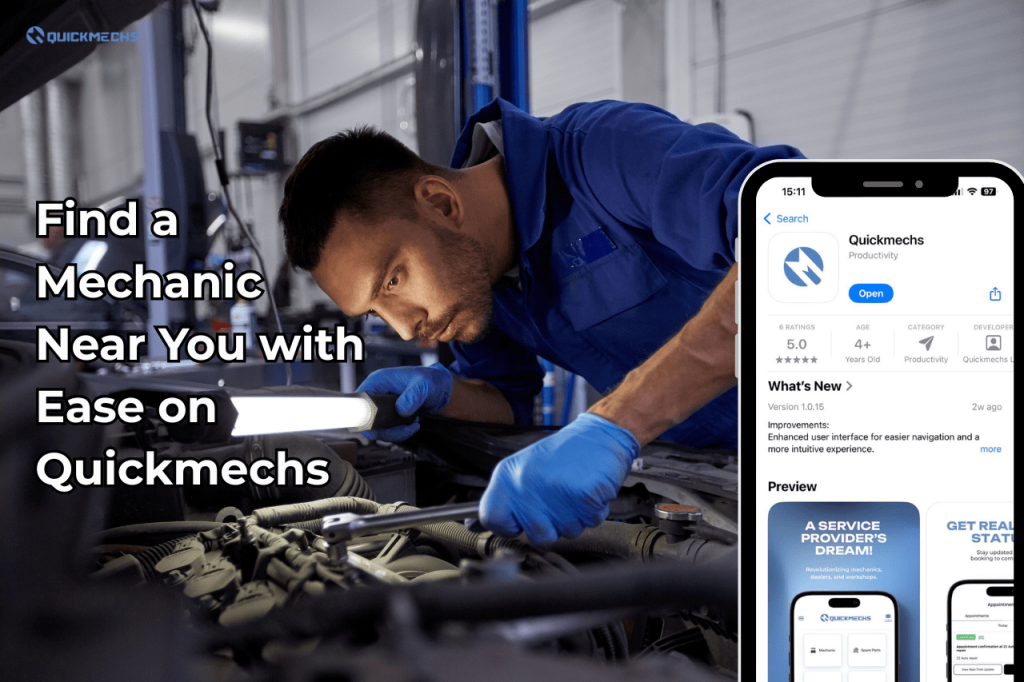
That’s changed now. You can find verified mechanics on QuickMechs who have gone through the vetting process in order to deliver the best to customers such as yourself. See how much they charge upfront as well as whatever part is needed to fix your car, which means no hidden fees or surprises.
our Car Deserves Better — So Do You
You’ve just read everything most car owners never bother to learn. The truth is, a car that’s properly maintained is not just more reliable — it saves you hundreds of thousands in unexpected repairs, emergency tows, and premature replacements.
But knowledge alone doesn’t protect your car. Action does.
Here’s how QuickMechs makes it easy:
- Free Car Diagnostics: Find out exactly what’s wrong with your car before you spend a kobo on repairs. No guesswork.
- 5% Off Your First Booking: Whether it’s a mechanic visit or a tow, your first service on QuickMechs comes with a discount. Just for trying us.
- Upfront Pricing: See exactly what you’ll pay before anyone touches your car. No hidden fees. No surprises at the end.
- Track Your Service Provider in Real Time: Know exactly where your mechanic or tow truck is. No more waiting and wondering.
- 12,000-Mile Warranty on All Mechanic Work: Every repair done through QuickMechs is backed by a 12,000-mile warranty. Because you deserve peace of mind, not just a receipt.
Don’t Wait for a Breakdown to Take Action, book a mechanic or tow truck on QuickMechs today.
Download the QuickMechs app right now on the App Store or Google Play. and book a mechanic in your location with one tap.