

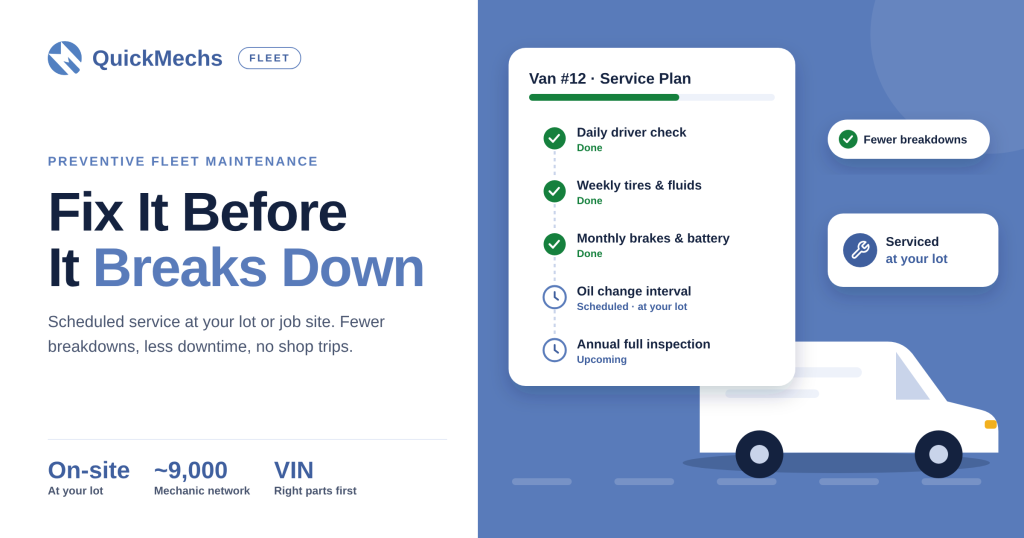
A breakdown on the road is the most expensive way to find out a vehicle needed attention. Preventive fleet maintenance flips that around: you fix small problems on your schedule, before they turn into tow trucks, missed jobs, and idle drivers.
The hard part has always been the time it takes. Every service means a trip to the shop and a vehicle off the road. QuickMechs removes that problem by sending verified mechanics to your lots and job sites, so preventive maintenance happens where your vehicles already are.
[Talk to the QuickMechs fleet team →]
Why Preventive Fleet Maintenance Pays Off
Reactive maintenance means waiting until something breaks. It feels cheaper in the moment, but it costs more over time:
- Breakdowns happen at the worst time, on a route, with a customer waiting
- Small problems grow, like worn pads that damage rotors
- Downtime stretches out while you wait for towing, a bay, and parts
- Emergency repairs cost more than planned ones
Preventive maintenance means:
- Fewer surprise breakdowns
- Shorter, planned service windows instead of days off the road
- Longer vehicle life
- More predictable costs you can budget for
- Safer vehicles and drivers
The Biggest Causes of Fleet Breakdowns
Most breakdowns trace back to a few systems that are easy to check:
Tires
Low pressure and worn tread lead to blowouts and flats.
Brakes
Worn pads and low fluid reduce stopping power and damage other parts.
Batteries and charging
Weak batteries cause no-start mornings, especially in hot and cold weather.
Fluids
Low oil, coolant, or transmission fluid can lead to overheating and engine damage.
Belts and hoses
Cracked belts and leaking hoses fail without warning.
Catch these early, and you prevent most roadside breakdowns.
A Simple Preventive Fleet Maintenance Schedule
Use this as a starting point, and always follow each vehicle manufacturer’s recommended intervals.
Every day (driver check)
- Walk around the vehicle
- Check tires for damage or low pressure
- Test lights, signals, and horn
- Look for leaks under the vehicle
- Note any warning lights on the dashboard
Every week
- Check tire pressure with a gauge
- Check oil and coolant levels
- Inspect wipers and washer fluid
Every month
- Inspect brakes for wear and noise
- Test the battery
- Check belts and hoses
- Review driver reports for repeat issues
At every oil change interval
- Oil and filter change
- Tire rotation
- Full fluid check and top-up
- Brake and suspension inspection
Every year
- Full vehicle inspection
- Cooling system service
- Review each vehicle’s repair history and plan replacements
Running commercial vehicles? Vehicles covered by federal rules must be systematically inspected, repaired, and maintained. The [FMCSA inspection and maintenance regulations] explain what’s required and which records to keep.
The Problem: Preventive Maintenance Takes Vehicles Off the Road
Most fleet managers know they should do preventive maintenance. The challenge is doing it without losing working days.
Every scheduled service traditionally means:
- A driver taking the vehicle to a shop
- Waiting for an open bay
- Hours, or a full day, off the route
So services get pushed back, and pushed back again, until something breaks.
How QuickMechs Makes Preventive Fleet Maintenance Easy
Maintenance at your lot or job site
QuickMechs sends verified mechanics to where your vehicles are parked. Oil changes, brake checks, battery tests, and routine services can be done on-site, so vehicles stay close to the job.
A ready network, no hiring
QuickMechs works with a network of about 9,000 mechanics. You get maintenance capacity without hiring technicians or building a mobile team.
Catch problems early with inspections
Use the in-app car inspection and vehicle health score to spot issues before they become breakdowns. Learn more in our upcoming post, Fleet Vehicle Inspections: Catch Problems Before They Hit the Road.
The right parts, planned ahead
Each vehicle is identified by its VIN, so the right parts and service are planned before the mechanic arrives.
Clear prices and records
See price estimates before work begins, and keep a clear repair record for every vehicle, which makes budgeting and compliance much easier.
Bigger jobs, still one place
When a vehicle needs a shop, QuickMechs can book a verified garage and arrange towing. One partner, not a list of vendors.
How to Get Started in 3 Steps
1. List your vehicles and their service history. Note when each was last serviced and any repeat problems.
2. Set your schedule. Use the schedule above and each manufacturer’s intervals.
3. Let QuickMechs do the work on-site. Book services through QuickMechs, and mechanics come to your vehicles on your schedule.
Tip: start with your highest-mileage or most problem-prone vehicles. That’s where preventive maintenance saves the most.
Preventive Fleet Maintenance: Quick Questions
What is preventive fleet maintenance?
It’s regular, scheduled servicing of fleet vehicles to catch and fix small problems before they cause breakdowns.
How often should fleet vehicles be serviced?
It depends on the vehicle, mileage, and use. Follow each manufacturer’s schedule, plus daily driver checks and monthly inspections.
Can preventive maintenance be done on-site?
Yes. Oil changes, brake checks, battery tests, fluid services, and many routine jobs can be done at your lot or job site with QuickMechs.
Does preventive maintenance really save money?
Planned services are typically cheaper than emergency repairs, and they reduce the downtime costs that come with breakdowns.
Fix It on Your Schedule, Not on the Roadside
Breakdowns don’t have to be part of running a fleet. With QuickMechs, preventive maintenance comes to your vehicles, problems get caught early, and your fleet stays on the road earning money.
Talk to the QuickMechs fleet team today and build a maintenance plan that keeps your vehicles working.
Next in this series: Fleet Vehicle Inspections: Catch Problems Before They Hit the Road.